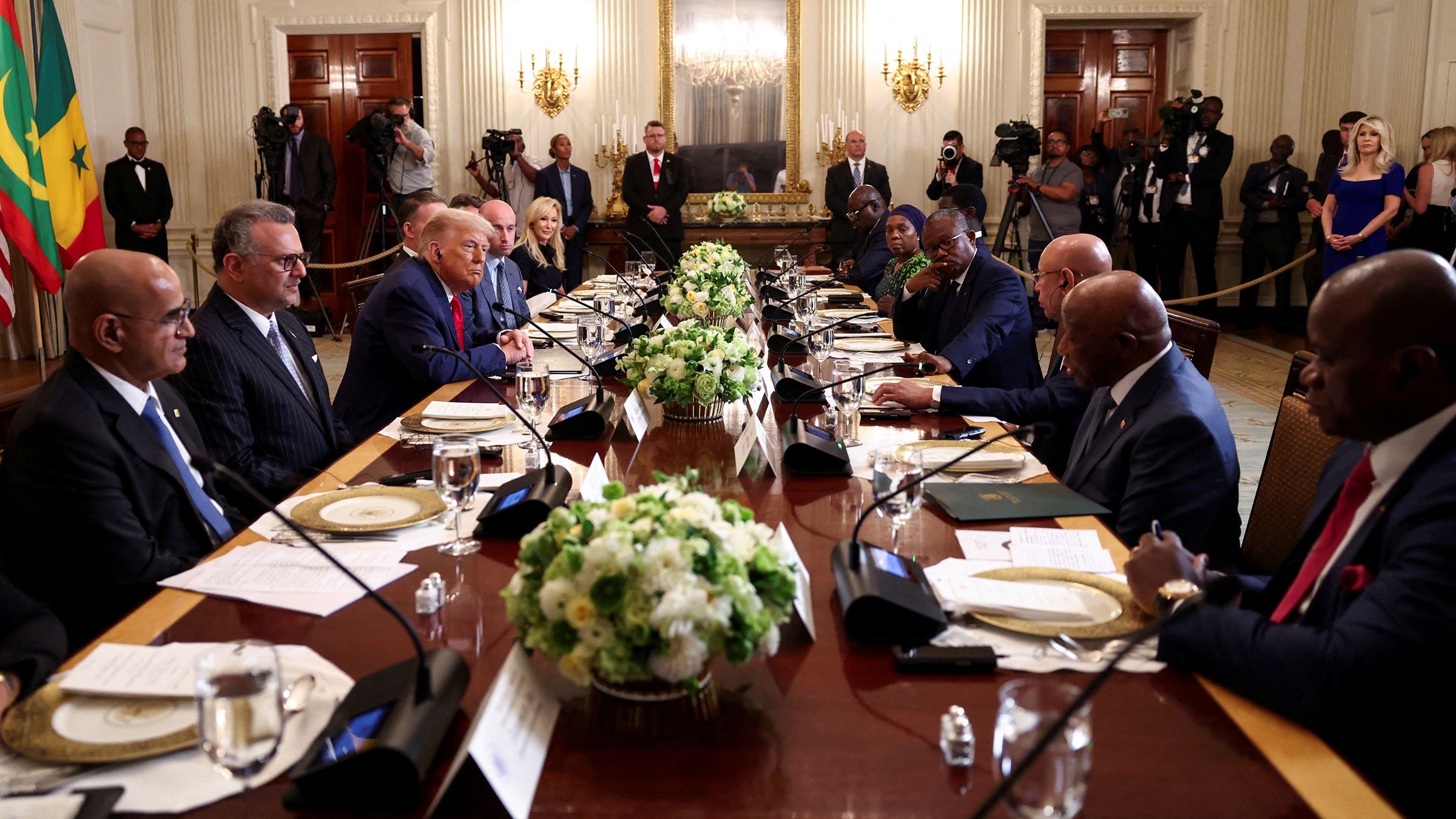
Trump praises Liberian President’s English — but what seemed like a compliment quickly sparked criticism across Africa. During a high-profile meeting at the White House, Trump expressed surprise at President Joseph Boakai’s fluency in English, despite the fact that English is Liberia’s official language. The remark drew backlash from citizens, politicians, and diplomats who felt the comment was patronizing and uninformed.
“Where Did You Learn to Speak So Beautifully?
The moment happened during a White House meeting with five African leaders. Trump turned to Boakai and said Trump praises
“Such good English. It’s beautiful. Where did you learn to speak so beautifully?”
Boakai responded simply: he was educated in Liberia — where, importantly, English is the official language.
Trump appeared surprised, replying, “That’s very interesting. I have people at this table who can’t speak nearly as well.”
Why That Question Rubbed People the Wrong Way
To some, it might have sounded like a genuine compliment. But in many African circles, the comment landed awkwardly — even offensively Trump praises liberia
Liberia was founded in the 1800s by freed American slaves. English has been spoken there for generations. So asking its president where he learned English felt like ignoring Liberia’s history and implying that fluency in English is somehow unexpected for an African leader Trump praises
A Liberian diplomat put it bluntly:
“It felt condescending. Liberia is an English-speaking nation — that should be known.”
Online and Political Backlash
The response was swift Trump praises
- A South African politician, Veronica Mente, questioned why President Boakai didn’t walk out of the meeting.
- Liberians on social media shared frustration, saying the remark reflected a deeper misunderstanding — or stereotype — about Africans being uneducated.
“It’s the kind of comment that shows how little some Western leaders know about Africa,” one X (formerly Twitter) user wrote. “We’re tired of being spoken to like this.”
The White House Fires Back
Trump’s advisors defended the remark. Massad Boulos, a senior advisor on African affairs, said:
“Everyone in the room was grateful for the President’s time. No U.S. president has been a better friend to Africa.”
Another White House spokesperson said Trump was simply impressed by the familiar American tone in Boakai’s English — and meant no offense.
Liberia’s Government Tries to Diffuse the Situation
To their credit, Liberian officials didn’t escalate things. Foreign Minister Sara Beysolow Nyanti told CNN:
“There was no offense taken by the president. What Trump heard was the American influence in Liberian English. He recognized something familiar.”
She added that language in Africa is complex — and not everyone outside the continent understands that.
A Pattern of Tone-Deaf Moments?
This wasn’t the first time Trump complimented a foreign leader’s English. He once told German Chancellor Friedrich Merz his English was impressive and joked about whether it was better than his German.
But this time, the comment stirred memories of Trump’s past remarks about Africa, including the now-infamous 2018 “shithole countries” comment.
A Softer Tone This Time — But Still Not Quite Right
At this week’s meeting, Trump praised the attending nations — Gabon, Guinea-Bissau, Liberia, Mauritania, and Senegal — for their resources, land, and people.
He even said their countries were “very vibrant” with “wonderful people” and “great potential.”
In response, Boakai said Liberia believes in “making America great again” — echoing Trump’s campaign slogan.
Final Thoughts: Why This Matters
At a time when global diplomacy is more sensitive than ever, words carry weight — especially from the U.S. president.
A compliment on language might seem harmless. But in the context of colonial history, long-standing stereotypes, and cultural pride, it can hit a nerve.
Leaders — especially those on the world stage — need to think twice before speaking once.